
Fifth Ray Cosmic Hue review
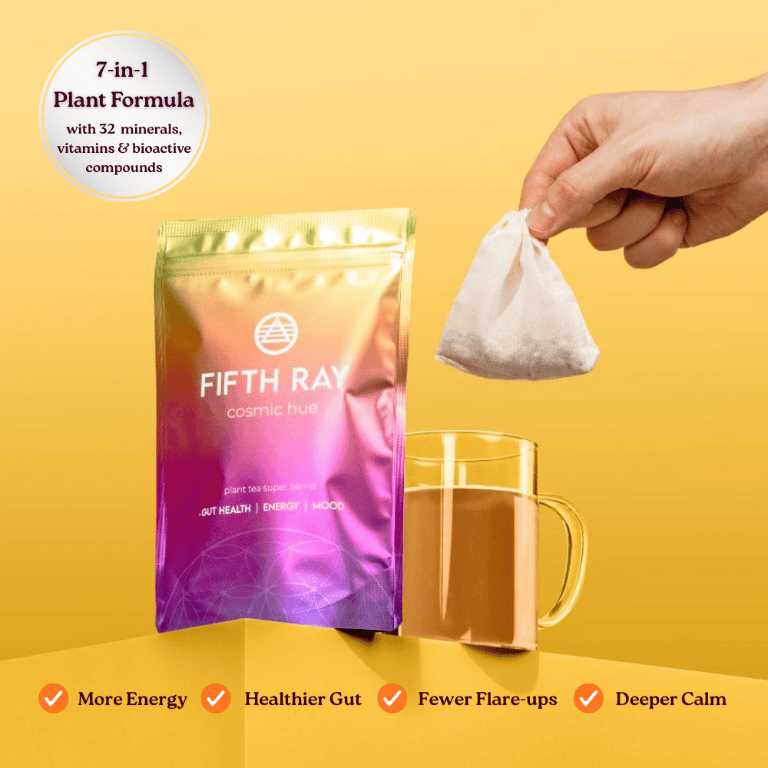
Fifth Ray Cosmic Hue is a loose tea of seven cut herbs: marshmallow root, fennel seed, ashwagandha root, echinacea root, astragalus root, cat's claw and nettle leaf. Fennel and marshmallow root are recognised by the European Medicines Agency for traditional use in mild digestive discomfort, and the other five are traditional herbs with some or limited research. Fifth Ray doesn't publish the amount of each herb in a cup, and the brand confirms the blend itself hasn't been studied. At £29 for 30 cups it costs about 97p a day.
The short answer
An enjoyable, caffeine-free herbal tea that may offer gentle support, built around fennel and marshmallow root, two herbs with recognised traditional use for mild digestive discomfort; the amount of each herb isn't published, and several herbs need care in pregnancy, autoimmune conditions and with some medicines.
- Seven cut whole herbs (root, seed and leaf) rather than standardised extracts; the amount of each herb per cup isn't published.
- Fennel and marshmallow root are recognised by the European Medicines Agency for traditional use in mild digestive discomfort, such as bloating and wind.
- Ashwagandha, echinacea, astragalus, cat's claw and nettle are traditional herbs with some or limited research; ashwagandha has mainly been studied as concentrated extracts for stress.
- Astragalus, cat's claw and echinacea act on the immune system; US health authorities advise caution or avoidance with autoimmune disease.
- £29 one-off for 30 cups (about 97p a cup); 66p to 77p a cup on subscription.
- Best for
- People who want a caffeine-free herbal drink and enjoy fennel-style teas; Anyone wanting a gentle daily tea ritual for occasional mild bloating, at a lower daily cost than most gut powders
- Not for
- Anyone who wants the amount of each ingredient printed on the pack; Pregnant or breastfeeding women; People with Crohn's, colitis or another autoimmune condition, unless their specialist agrees; People on blood thinners or immune-suppressing medicines; Children
- Brand website
- fifthray.co.uk
What we like
- Caffeine-free and vegan
- Fennel and marshmallow root are recognised by the European Medicines Agency for traditional use in mild digestive discomfort
- A simple, gentle daily ritual: one warm cup a day
- Every herb is named, and the brand shows it as cut whole root, seed and leaf
- Lower daily cost than most gut powders
What we don’t
- The amount of each herb per cup isn't published
- The blend itself hasn't been studied, as the brand acknowledges
- Several herbs have pregnancy, autoimmune and medicine cautions the product page doesn't spell out
- No third-party testing information
- Some marketing goes beyond authorised GB health claims, and the product page features customer stories about Crohn's disease and ulcerative colitis
Our verdict
Cosmic Hue is a caffeine-free loose tea made from seven herbs. Two of them, fennel and marshmallow root, have a long history of use for mild digestive discomfort, and the European Medicines Agency recognises that traditional use. The other five, ashwagandha, echinacea, astragalus, cat's claw and nettle, are traditional herbs with some or limited research in people. Fifth Ray doesn't publish how much of each herb is in a cup, and its own science page confirms the blend itself hasn't been studied.
As an enjoyable, potentially supportive daily drink for occasional mild bloating, it is a pleasant, low-cost option for adults who aren't pregnant and don't have an autoimmune condition. It is a herbal tea, not a medicine, so it isn't a replacement for treatment from your GP. If you would rather have every amount on the label, FOCUL Gut + Mind is easier to compare.
What's in it
The product page lists seven herbs: marshmallow root, fennel seed, ashwagandha root, echinacea root, astragalus root, cat's claw and stinging nettle leaf. The brand's photos show chopped root, seeds and leaf, and it says every ingredient is "the root or leaf of plants" with nothing else added. So these are cut whole herbs, as in a traditional herbal tea, rather than standardised extracts (extracts concentrated to a set level of active compounds).
You add two scoops to a reusable cotton bag and steep it in hot water for 3 to 5 minutes. The product page doesn't give the amount of each herb per scoop or per 30-cup pouch, so we can't set a cup alongside the amounts in traditional guidance or research.
What the research says
Fennel seed is the most relevant herb for digestion. The European Medicines Agency (EMA) recognises sweet fennel tea as a traditional herbal remedy for mild, spasmodic digestive complaints, including bloating and wind. Its guidance describes 1.5 g of seed steeped for 15 minutes, three times a day, for up to two weeks; Cosmic Hue's suggested steep is shorter, at 3 to 5 minutes. The EMA's recognition rests on long-standing use rather than clinical trials. We grade it C.
Marshmallow root forms a soft, slippery gel (mucilage) in water. The EMA recognises it for the relief of mild stomach discomfort, again on the basis of traditional use, and describes 2 to 5 g of root soaked in cold water three times a day. We grade it C.
Ashwagandha has some research for stress. The trials used concentrated root extracts at 300 to 600 mg a day, and a 2022 meta-analysis found benefits while rating the certainty of the evidence as low. In a tea it is part of a gentle blend rather than a concentrated extract. We grade it C.
Echinacea has mainly been studied for colds, with mixed results in a Cochrane review, and research for digestion is limited. Astragalus and cat's claw are long-used traditional herbs; US health authorities describe research in people as limited. Nettle is a traditional herb with limited research for digestive symptoms. We grade each of these C.
Some statements on Fifth Ray's pages, such as that the tea "repairs the gut lining" and is "proven to reduce stress & anxiety", go beyond the health claims authorised in GB. The product page also features customer stories about Crohn's disease and ulcerative colitis, with their own review sections. We can't comment on individual experiences, but it's worth being mindful of. Enjoy it as a pleasant, potentially supportive daily drink rather than a treatment, and always speak to your GP if you have Crohn's disease or colitis. Never stop prescribed treatment.
Value for money
One pouch costs £29 for 30 cups, or about 97p a day at the suggested one cup. Subscriptions bring it to between 66p and 77p a cup. That is cheaper per day than Spacegoods Rainbow Dust (about £1.63) or Myota (about £1.67), and close to FOCUL Gut + Mind on its subscription plans. Because the amount of each herb isn't published, it is harder to compare like for like, but as a daily herbal tea the price is reasonable.
Who should take it (and who shouldn't)
It may suit adults who enjoy a caffeine-free hot drink and have occasional mild bloating, and who see it as a herbal tea rather than a treatment.
Don't drink it if you are pregnant or breastfeeding. EU guidance doesn't recommend fennel or marshmallow root then, cat's claw appears unsafe in pregnancy, and the Food Standards Agency advises pregnant women to avoid ashwagandha. If you have Crohn's, colitis or another autoimmune condition, or take immune-suppressing medicines, talk to your specialist first: astragalus may worsen autoimmune disease and may interact with immune-suppressing drugs, and cat's claw and echinacea can stimulate the immune system. Cat's claw may interact with blood thinners and blood pressure medicines. People with liver conditions should avoid ashwagandha. It isn't suitable for children. New, persistent or worsening gut symptoms, blood in your stools or unexplained weight loss need a GP visit.
How to take it
Put two scoops in the reusable bag, add hot water and steep for 3 to 5 minutes; the brand suggests one cup a day. Because marshmallow root can delay the absorption of other medicines, leave 30 to 60 minutes between the tea and any tablets. The NHS suggests no more than four cups of herbal tea a day in pregnancy, though we would avoid this blend entirely then. EU guidance limits medicinal fennel tea to two weeks and advises seeing a doctor if stomach discomfort lasts more than two weeks while using marshmallow root, so if bloating hasn't eased by then, stop and see your GP.
Alternatives worth considering
- FOCUL Gut + Mind: a gut-and-mind powder with every amount on the label.
- Myota Gut Health Fibre Blend: a low FODMAP fibre blend with 9.8 g of fibre a scoop.
- Spacegoods Rainbow Dust: a caffeinated mushroom drink, better suited to focus than digestion.
- THERA Nordic REZCUE: zinc carnosine and glutamine, researched for supporting the gut lining.
Ingredients and doses
| Ingredient | Per serving | Studied dose | Grade |
|---|---|---|---|
| Marshmallow root (Althaea officinalis, cut root)Accepted for mild stomach discomfort on the basis of long-standing use, not clinical trials. | Not disclosed | 2–5 g of root as a cold-water soak, 3 times a day (EMA traditional use) | Grade C: Some support |
| Fennel seed (Foeniculum vulgare)The best-supported digestive herb here, for bloating and wind, again based on traditional use. | Not disclosed | 1.5 g of seed steeped for 15 minutes, 3 times a day, for up to 2 weeks (EMA traditional use) | Grade C: Some support |
| Ashwagandha root (Withania somnifera, cut root)Studied as concentrated extracts for stress; the amount in a cup isn't disclosed. | Not disclosed | 300–600 mg a day of concentrated root extract in stress trials | Grade C: Some support |
| Echinacea rootStudied mainly for colds; research for digestion is limited. | Not disclosed | Not established for gut symptoms | Grade C: Some support |
| Astragalus rootA traditional herb; research in people is limited. | Not disclosed | Not established | Grade C: Some support |
| Cat's claw (Uncaria tomentosa)A traditional herb; research in people is limited. | Not disclosed | Not established | Grade C: Some support |
| Stinging nettle leafA traditional herb; research for digestive symptoms is limited. | Not disclosed | Not established for gut symptoms | Grade C: Some support |
- Third-party testing
- No third-party testing or certificates found on the brand's site. The reusable tea bag is described as organic cotton; we found no organic certification for the herbs themselves.
- Allergens
- None declared; the brand says it is free from the 14 major allergens. Fennel can cause allergy in people sensitive to celery, aniseed, caraway, coriander, dill or mugwort pollen, and echinacea in people allergic to the daisy family.
Safety notes
- Pregnancy and breastfeeding: EU herbal monographs don't recommend fennel or marshmallow root in pregnancy or breastfeeding, US health authorities say cat's claw appears unsafe in pregnancy, and the Food Standards Agency advises pregnant women to avoid ashwagandha supplements.
- Autoimmune conditions, including Crohn's disease and ulcerative colitis: astragalus may worsen autoimmune disease, and cat's claw and echinacea may stimulate the immune system. Speak to your IBD team or GP first, and never stop prescribed treatment.
- Medicines: cat's claw may interact with blood thinners and blood pressure drugs; astragalus may interact with immune-suppressing drugs. Marshmallow root can slow the absorption of other medicines, so leave 30 to 60 minutes either side.
- The Food Standards Agency advises people with pre-existing liver conditions to avoid ashwagandha supplements.
- Children: EU guidance doesn't recommend marshmallow root tea for digestive use under 12, or fennel tea under 4.
- New, persistent or worsening gut symptoms, blood in your stools or unexplained weight loss need a GP visit.
This is general information, not medical advice. Check with a GP or pharmacist first if you take medicines, are pregnant or breastfeeding, or have a health condition.
Questions people ask
- What is in Fifth Ray Cosmic Hue?
- Seven cut herbs: marshmallow root, fennel seed, ashwagandha root, echinacea root, astragalus root, cat's claw and nettle leaf. It is caffeine-free and, according to the brand, has nothing else added.
- How much of each herb is in a cup of Cosmic Hue?
- Fifth Ray doesn't publish this. Its product page lists the seven herbs and suggests two scoops per cup, but doesn't give the amount of each herb per cup or per pack.
- Can Cosmic Hue help Crohn's disease or ulcerative colitis?
- Cosmic Hue is a herbal tea, not a medicine, and the blend hasn't been studied in people with inflammatory bowel disease. Some of its herbs act on the immune system, so always speak to your GP or IBD team before drinking it if you have Crohn's or colitis, and never stop prescribed treatment.
- Is Cosmic Hue safe in pregnancy?
- We wouldn't drink it while pregnant or breastfeeding. EU herbal guidance doesn't recommend fennel or marshmallow root in pregnancy, cat's claw appears unsafe in pregnancy, and the Food Standards Agency advises pregnant women to avoid ashwagandha.
Compare with
8.2
Myota Gut Health Fibre Blend review
A gentle, Monash-certified low FODMAP fibre blend led by PHGG, a sensible daily top-up for sensitive guts, but at £50 for one bag as a one-time purchase it costs considerably more than FOCUL Gut + Mind (£34.99).
£1.67 a day
powder5.2
Spacegoods Rainbow Dust review
Mainly a caffeinated focus drink, with a meaningful caffeine dose and 300 mg of KSM-66 ashwagandha. Its gut fibre feels like an add-on: it appears in the coffee flavours only, in a modest amount, and it costs more per day than FOCUL Gut + Mind.
£1.63 a day
powder9.1
FOCUL Gut + Mind review
Includes ingredients that support the crucial gut-brain axis. Its standout ingredients are PHGG fibre, which has evidence for IBS, and DGL extract, which may support the soothing of the oesophagus and the protective mucosal lining of the digestive tract.
£1.17 a day
powder8.1
THERA Nordic REZCUE review
A simple, fully labelled two-ingredient powder with zinc carnosine at the amount used in small UK gut studies, though it hasn't been tested for reflux and zinc carnosine's novel-food safety review in Europe is unresolved.
£1.25 a day
powder