
FOCUL Gut + Mind review
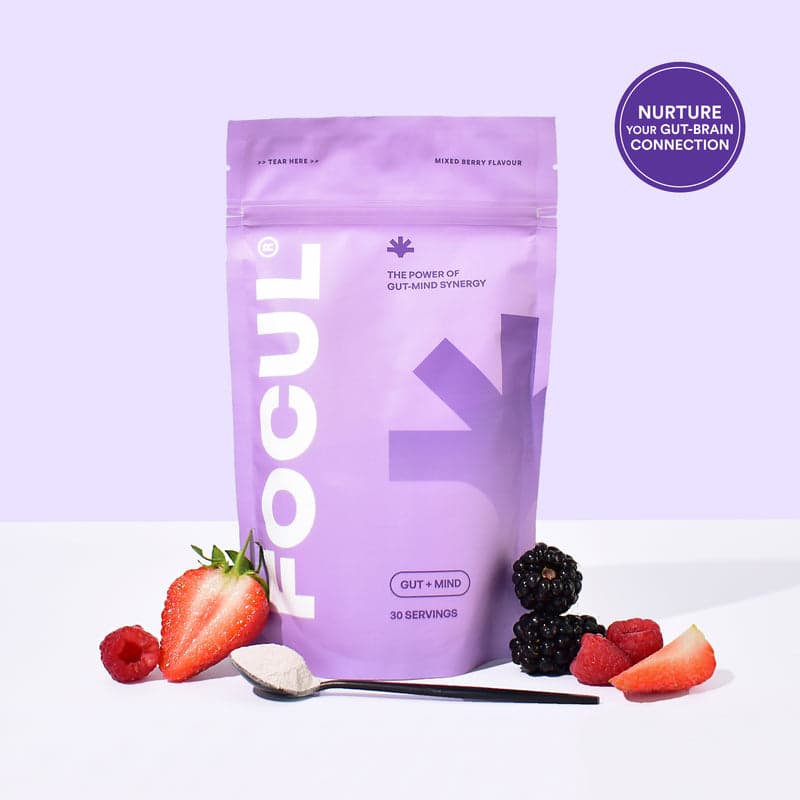
FOCUL Gut + Mind (Mixed Berry) is a UK-made powder with 10 active ingredients: 3 g of partially hydrolysed guar gum (PHGG), 2 g of L-glutamine, deglycyrrhizinated liquorice (DGL), lion's mane, Panax ginseng and L-theanine, plus vitamin B5, zinc, magnesium and calcium. Every amount and extract ratio is on the label, which is good practice, and the ingredients work together to support both the gut and the mind. It costs about £1.17 a day bought one-off, 93p on a monthly subscription and 75p on the three-bag quarterly plan.
The short answer
Includes ingredients that support the crucial gut-brain axis. Its standout ingredients are PHGG fibre, which has evidence for IBS, and DGL extract, which may support the soothing of the oesophagus and the protective mucosal lining of the digestive tract.
- Every ingredient has a stated amount, and the herbal extracts give their ratios (4:1 or 20:1); there is no hidden 'proprietary blend'.
- 3 g of PHGG, a gentle fibre that has been studied in people with IBS, plus DGL, which is widely used to support the stomach's protective mucous lining.
- About £1.17 a day one-off (£34.99 for 30 servings), 93p a day on monthly Subscribe & Save (£27.99 a bag) and 75p a day on the three-bag quarterly plan (£22.40 a bag).
- Contains DGL (liquorice with most of its glycyrrhizin removed) and Panax ginseng; check with a GP or pharmacist if you take regular medicines.
- Best for
- People who experience IBS, reflux and heartburn: PHGG fibre has evidence for IBS, DGL may help soothe the oesophagus, and support for the gut-brain connection may help ease stress, which can play a part in reflux; People who want one daily powder aimed at both digestion and the gut-brain side; People with sensitive stomachs who want a gentler fibre than inulin; Shoppers who want every dose and extract ratio printed on the label
- Not for
- Anyone looking for a single, high-dose ingredient rather than a blend; Pregnant or breastfeeding women; Anyone hoping to replace prescribed reflux treatment
- Brand website
- foculsupport.com
What we like
- Full label: every amount stated, with extract ratios for DGL, lion's mane and ginseng
- PHGG is a soluble fibre that one branded form has had certified low-FODMAP
- Minerals and vitamin B5 at 20–100% of the reference intake, with authorised claims
- Made in the UK, according to the pack
- Mid-range daily cost, and among the cheapest gut powders on the quarterly plan
What we don’t
- Comes in just one flavour (Mixed Berry)
- Some ingredients are below the doses used in research, but may offer wider support
- No trials of the finished blend
Our verdict
FOCUL Gut + Mind is a multi-ingredient powder in which each ingredient has its own job: a gentle fibre for the gut bacteria, glutamine and DGL aimed at the gut lining and upper gut, three "mind" ingredients, and four nutrients. The label is unusually complete, with every amount and extract ratio printed, and the price is mid-range.
Rather than relying on one high-dose ingredient, it combines several that support the gut and the gut-brain connection in different ways, at amounts designed for everyday use over time. Some ingredients are below the doses used in individual studies, and the finished blend hasn't been trialled, which is true of most products in this category. As a daily all-round gut and mind supplement, it is one of the most complete we reviewed. It is a supplement, not a medicine, so it isn't a replacement for treatment from your GP.
What's in it
We checked the label of the new Mixed Berry formula, now on sale, against FOCUL's UK product page (October 2026). Each 9 g serving (2 level teaspoons) contains:
- For the gut bacteria: 3,000 mg partially hydrolysed guar gum (PHGG), a gentle soluble fibre that feeds gut bacteria and tends to be well tolerated
- For the gut lining and upper gut: 2,000 mg L-glutamine, an amino acid gut-lining cells use for fuel, and 1,600 mg DGL (from 400 mg of a 4:1 extract), liquorice with most of its glycyrrhizin removed
- For the "mind" side: 1,000 mg lion's mane (from 250 mg of a 4:1 fruiting-body extract), 1,000 mg Panax ginseng (from 50 mg of a 20:1 extract) and 100 mg L-theanine
- Nutrients: 6 mg vitamin B5 (100% of the reference intake), 2.5 mg zinc (25%), 75 mg magnesium (20%) and 166 mg calcium (21%)
It also contains natural flavourings, citric and malic acid, beetroot powder and stevia. Bacopa and inulin from the earlier formula have been removed.
What the research says
PHGG. This is one of the best-studied gentle fibres. Research indicates positive results for bloating in people with IBS, and it has been found to be better tolerated than wheat bran. Studies in healthy adults have also linked it with improvements in gut health, sleep and motivation, and it has been studied for constipation in older adults. It is gentle enough for steady, long-term daily use.
Glutamine. Glutamine is a key fuel for the cells that line the gut, which is why it is so often included in gut formulas. Some research indicates positive results for gut symptoms in people with IBS that started after a gut infection.
DGL. DGL is liquorice with most of its glycyrrhizin removed, so it can be taken daily. It has been used since at least the 1970s and is widely taken by people looking to support the stomach's protective mucous lining. Research on liquorice extracts indicates positive results for indigestion and reflux symptoms.
Lion's mane. Some research indicates positive results for memory and mental performance.
Panax ginseng. A traditional herb, popular for energy and focus. Some research indicates positive results for working memory and feelings of calm.
L-theanine. This amino acid from tea is popular for calm focus. A 2026 review of 31 trials found it improved attention.
The vitamin and minerals are at meaningful levels and carry authorised GB claims, for example "calcium contributes to the normal function of digestive enzymes" and "pantothenic acid contributes to normal mental performance".
Value for money
Prices are from the product listing, checked on 13 October 2026. Using the pack's 30 servings per pouch:
- One bag one-off: £34.99, about £1.17 a day
- Monthly Subscribe & Save: £27.99 a bag, about 93p a day
- Three-bag quarterly subscription: £22.40 a bag, about 75p a day
That is cheaper than THERA Nordic REZCUE (about £1.25 a day at full price), Myota and Spacegoods Rainbow Dust (both about £1.63–£1.67 a day). Fifth Ray Cosmic Hue is about 97p. You get ten active ingredients and a complete label for a mid-range price.
Who should take it (and who shouldn't)
It suits adults who want one daily powder for digestion and the gut-brain side, with a gentler fibre than inulin and a complete label. If you want a single ingredient at a high dose, a single-ingredient product will suit you better.
Avoid it in pregnancy or breastfeeding. Because of the ginseng, check with a doctor or pharmacist if you have diabetes or take blood thinners or regular medicines. Don't stop a prescribed acid-reducing medicine without talking to your GP. Heartburn most days, trouble swallowing or unexplained weight loss need a GP visit.
How to take it
Mix 2 level teaspoons into 350 ml of water once a day. If fibre supplements usually give you wind, start with half a serving.
The PHGG trials ran for 4 to 12 weeks, so give it about 8 to 12 weeks before judging it. If nothing has changed by then, stop.
Alternatives worth considering
- THERA Nordic REZCUE: zinc carnosine and glutamine for the gut lining, at a slightly higher daily cost.
- Myota Gut Health Fibre Blend: a low FODMAP, fibre-only blend if more fibre is your main aim.
- Spacegoods Rainbow Dust: a mushroom and adaptogen drink aimed more at focus and energy.
- Fifth Ray Cosmic Hue: a herbal gut tea at a lower daily cost.
Ingredients and doses
| Ingredient | Per serving | Studied dose | Grade |
|---|---|---|---|
| Partially hydrolysed guar gum (PHGG)A gentle soluble fibre that feeds gut bacteria, tends to be well tolerated and is well suited to daily use over time. | 3,000 mg | Studied at 3–6 g a day, including in people with IBS | Grade A: Well established |
| L-glutamineAn amino acid that the cells lining the gut use as a key source of fuel. | 2,000 mg | Studied at a wide range of amounts; some gut trials used much higher doses | Grade C: Some support |
| Deglycyrrhizinated liquorice root (DGL), 4:1 extractLiquorice with most of its glycyrrhizin removed, widely used to support the stomach's protective mucous lining. | 1,600 mg (from 400 mg of 4:1 extract) | Used at a range of amounts; no single established dose | Grade B: Good support |
| Lion's mane (Hericium erinaceus) fruiting body, 4:1 extractA culinary mushroom studied in small trials for memory and mental performance. | 1,000 mg (from 250 mg of 4:1 extract) | 1.8–3 g a day of mushroom in small trials | Grade C: Some support |
| Panax ginseng, 20:1 extractA traditional herb studied for energy and mental performance; a gentle amount suited to a daily blend. | 50 mg of 20:1 extract (equivalent to 1,000 mg of root) | 200–400 mg a day of a standardised extract in short trials | Grade C: Some support |
| L-theanineAn amino acid found in tea, studied for calm focus and attention. | 100 mg | Around 200 mg in most trials | Grade B: Good support |
| Pantothenic acid (vitamin B5)Authorised claim: contributes to normal mental performance and the reduction of tiredness and fatigue. | 6 mg (100% RI) | Authorised claims apply from 15% of the reference intake | Grade A: Well established |
| Zinc (as citrate)Authorised claims include normal cognitive function and normal immune function. | 2.5 mg (25% RI) | Authorised claims apply from 15% of the reference intake | Grade A: Well established |
| Magnesium (as bisglycinate)Authorised claims include normal psychological function and the reduction of tiredness and fatigue. | 75 mg (20% RI) | Authorised claims apply from 15% of the reference intake | Grade A: Well established |
| Calcium (as lactate)Authorised claim: contributes to the normal function of digestive enzymes. | 166 mg (21% RI) | Authorised claims apply from 15% of the reference intake | Grade A: Well established |
- Third-party testing
- Independently tested by Eurofins Scientific and Romer Labs®, two well-known food testing laboratories, and certified gluten-free (under 5 ppm). As with Myota, we didn't find a public certificate of analysis on the brand's website or in wider searches.
- Allergens
- None declared on the pack. The pack says it is gluten free, with no fillers, preservatives or anything artificial.
Safety notes
- DGL has most of its glycyrrhizin removed, which is what makes it suitable for daily use. If you take regular medicines, check with a pharmacist first.
- Panax ginseng may lower blood sugar and interfere with blood clotting. If you have diabetes or take blood thinners, speak to your doctor first.
- Not advised during pregnancy or breastfeeding, or for children, because of the liquorice and ginseng.
- Start with a smaller amount if fibre supplements tend to cause you wind or bloating.
- If you take a prescribed acid-reducing medicine such as omeprazole, don't stop or change it without speaking to your GP.
- Heartburn most days, food sticking when you swallow, frequent vomiting or unexplained weight loss need a GP visit, not a supplement.
This is general information, not medical advice. Check with a GP or pharmacist first if you take medicines, are pregnant or breastfeeding, or have a health condition.
Questions people ask
- What is in FOCUL Gut + Mind?
- Per 9 g serving: 3,000 mg PHGG, 2,000 mg L-glutamine, 1,600 mg DGL (from 400 mg of 4:1 extract), 1,000 mg lion's mane (from 250 mg of 4:1 extract), 1,000 mg Panax ginseng (from 50 mg of 20:1 extract), 100 mg L-theanine, 6 mg vitamin B5, 2.5 mg zinc, 75 mg magnesium and 166 mg calcium, plus flavourings, citric and malic acid, beetroot powder and stevia.
- Does FOCUL Gut + Mind help acid reflux?
- Some of its ingredients have been researched for the upper gut. DGL is widely used to support the stomach's protective mucous lining, and research on liquorice extracts indicates positive results for reflux symptoms. Think of it as everyday support rather than a treatment, and see your GP if you have heartburn most days.
- Is PHGG low FODMAP?
- PHGG is generally chosen as a gentle fibre that suits sensitive guts better than inulin, and one branded form, Sunfiber, is certified low FODMAP by Monash University.
- How many servings are in a pouch?
- 30 servings, according to the pack. We use 30 to work out the daily cost.
- Can I take FOCUL Gut + Mind with medication?
- Check with a GP or pharmacist first. Ginseng may affect blood sugar and blood clotting.
Compare with
8.1
THERA Nordic REZCUE review
A simple, fully labelled two-ingredient powder with zinc carnosine at the amount used in small UK gut studies, though it hasn't been tested for reflux and zinc carnosine's novel-food safety review in Europe is unresolved.
£1.25 a day
powder8.2
Myota Gut Health Fibre Blend review
A gentle, Monash-certified low FODMAP fibre blend led by PHGG, a sensible daily top-up for sensitive guts, but at £50 for one bag as a one-time purchase it costs considerably more than FOCUL Gut + Mind (£34.99).
£1.67 a day
powder5.2
Spacegoods Rainbow Dust review
Mainly a caffeinated focus drink, with a meaningful caffeine dose and 300 mg of KSM-66 ashwagandha. Its gut fibre feels like an add-on: it appears in the coffee flavours only, in a modest amount, and it costs more per day than FOCUL Gut + Mind.
£1.63 a day
powder4.5
Fifth Ray Cosmic Hue review
An enjoyable, caffeine-free herbal tea that may offer gentle support, built around fennel and marshmallow root, two herbs with recognised traditional use for mild digestive discomfort; the amount of each herb isn't published, and several herbs need care in pregnancy, autoimmune conditions and with some medicines.
97p a day
tea