
Myota Gut Health Fibre Blend review
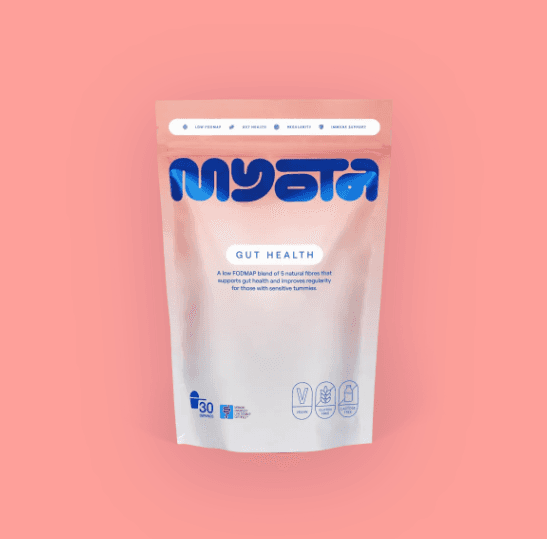
Myota's Gut Health fibre blend, sold on its site as The Gentle Daily Fibre Blend, is an unflavoured, vegan powder made from five fibres: partially hydrolysed guar gum (PHGG), oat fibre, wheat fibre, cellulose and guar fibre. A 10 g scoop gives 9.8 g of fibre, about a third of the NHS's 30 g daily target, and the blend is certified low FODMAP by Monash University. Myota lists the total fibre but not the amount of each fibre, and its published trials tested its other blends. At £50 for 30 scoops it costs about £1.67 a day, or about £1.10 on the 90-day subscription.
The short answer
A gentle, Monash-certified low FODMAP fibre blend led by PHGG, a sensible daily top-up for sensitive guts, but at £50 for one bag as a one-time purchase it costs considerably more than FOCUL Gut + Mind (£34.99).
- 9.8 g of fibre per 10 g scoop from five named fibres; the amount of each fibre isn't published.
- Certified low FODMAP by Monash University, and built on slower-fermenting fibres rather than inulin or chicory root.
- Its lead fibre, PHGG, has been studied in people with IBS: in a 2016 trial, 6 g a day for 12 weeks eased bloating compared with placebo.
- Myota's published trials used its other fibre blends, so there is no trial of this exact recipe yet.
- £50 one-off for 30 scoops (about £1.67 a day); £45 a month on subscription (£1.50 a day) or about £1.10 a day on the 90-day plan.
- Best for
- People with a sensitive gut or IBS who want more fibre without high-FODMAP fibres such as inulin; Adults who eat well under the 30 g a day fibre target and want an easy top-up; People who want an unflavoured, vegan powder rather than capsules
- Not for
- People with a wheat allergy; Anyone who wants the amount of each fibre on the label; Anyone on a tight budget; Anyone hoping to replace treatment from a GP or dietitian
- Brand website
- myotahealth.com
What we like
- Five fibres, led by PHGG, a gentle prebiotic fibre studied in people with IBS
- Certified low FODMAP by Monash University
- About a third of the NHS's 30 g daily fibre target in one scoop
- Vegan, lactose-free and gluten-free, according to the brand
- Unflavoured, so it mixes into food or drink, hot or cold
- Clear advice to build up slowly from half a scoop
What we don’t
- Individual fibre amounts aren't disclosed
- No published trial of this blend; Myota's trials used its other blends
- The 'clinically proven to relieve digestive symptoms' claim rests on a customer survey, not a trial of this blend
- £50 one-off is considerably more than FOCUL Gut + Mind (£34.99)
- The product page mentions added zinc, but zinc isn't listed in the ingredients or nutrition table
Our verdict
Myota is a London fibre brand with an in-house science team. Its Gut Health blend is its gentler option: a tasteless scoop that adds about 10 g of fibre a day from five slower-fermenting fibres, led by partially hydrolysed guar gum (PHGG). It is certified low FODMAP by Monash University, which matters because fast-fermenting fibres such as inulin are a common reason people with sensitive guts give up on fibre. For most UK adults, who fall short of the 30 g a day the NHS recommends, it is a useful top-up.
PHGG is one of the better-studied gentle fibres, including in people with IBS. The catch is that Myota doesn't say how much of each fibre is in a scoop, and its own published trials tested its other blends. It is a supplement, not a medicine. At £50 for one bag bought one-off, it costs considerably more than FOCUL Gut + Mind (£34.99), which also contains PHGG, with every amount on the label.
What's in it
Each 10 g scoop contains 9.8 g of fibre, 20 kcal and 0.2 g of sugar, with no fat, protein or salt. The fibre comes from five sources:
- Partially hydrolysed guar gum (PHGG): a gentle soluble fibre that feeds gut bacteria and tends to be well tolerated
- Oat fibre: soluble and insoluble fibre plus beta-glucan, certified gluten-free according to the brand
- Wheat fibre: an insoluble fibre that adds bulk, also certified gluten-free
- Cellulose: an insoluble plant fibre that adds bulk and ferments very little
- Guar fibre: a gel-forming soluble fibre
Myota describes it as a patented blend and lists the total fibre, but not the amount of each fibre. That makes it hard to compare the PHGG content with the amounts used in research. The product page says added zinc supports memory, learning and focus, but we can't see zinc listed anywhere in the ingredients or the nutrition table. Because of that mismatch, we haven't counted it. The blend is vegan, lactose-free and unflavoured.
What the research says
PHGG. This is the best-studied fibre in the blend. In a 2016 double-blind trial in 121 people with IBS, 6 g a day for 12 weeks eased bloating compared with placebo, though other IBS scores didn't change. A 2002 open trial in 188 people with IBS found 5 g a day was better tolerated than wheat bran, and smaller studies have looked at PHGG for constipation, including a 2022 trial in which care-home residents taking 5 g a day used fewer laxatives. We'd grade PHGG A when the amount is on the label; here it is B because the amount isn't disclosed.
Fibre in general. A 2022 meta-analysis of 16 trials found fibre supplements improved constipation, with the clearest results at more than 10 g a day for at least four weeks. A full scoop gives 9.8 g, close to that level. Fibre also increased wind compared with control groups, which is why building up slowly matters.
Why low FODMAP matters. A 2019 meta-analysis found prebiotic fibres raised bifidobacteria (a type of gut bacteria) in people with IBS, but inulin-type fibres made wind worse. This blend avoids those fibres, and its Monash certification confirms it is suitable for a low FODMAP diet. NICE advises people with IBS to choose soluble fibre if they want more, suggests oats for wind and bloating, and advises limiting insoluble fibre such as bran. The blend is mainly gentle, soluble fibre, but it does include insoluble wheat fibre and cellulose, so introduce it gradually.
Other fibres. Oat, wheat and guar fibre are well-known food fibres, but there are no trials of them at the amounts in this blend. Cellulose has little research as a supplement on its own; Myota's own pre-diabetes trial used it as the placebo.
Myota's own trials. Myota has published two small, company-funded trials, one in pre-diabetes and one in metabolic syndrome, but both tested its other blends. The digestive figures on the product page come from a survey of 263 customers, which has no comparison group, so we'd treat them as encouraging rather than as trial evidence.
Value for money
A one-off 300 g pouch costs £50 for 30 scoops, or about £1.67 a day. A monthly subscription takes 10% off (£45, or £1.50 a day), and the 90-day plan takes 34% off (£33 a pouch, about £1.10 a day). Subscriptions ship free; one-off orders have free delivery over £50.
That is more than FOCUL Gut + Mind (about £1.17 a day one-off, from 75p on subscription), which includes PHGG with a stated amount alongside nine other ingredients. It is also more than THERA Nordic REZCUE (about £1.25 a day) and Fifth Ray Cosmic Hue (about 97p), and similar to Spacegoods Rainbow Dust (about £1.63). With Myota you are paying for close to 10 g of gentle fibre a day and a low FODMAP certification.
Who should take it (and who shouldn't)
It suits adults who know they eat too little fibre and have found that inulin or chicory-based products upset their gut. It is also a good fit for people following, or coming off, a low FODMAP diet who want to add fibre back gently. If you have IBS, it's worth discussing with your GP or a dietitian, as Myota itself suggests.
It isn't suitable for people with a wheat allergy, even though the wheat fibre is certified gluten-free. If you have had a bowel obstruction or have trouble swallowing, check with your doctor first. Unexplained weight loss, bleeding from your bottom or a lump in your tummy need an urgent GP appointment.
How to take it
Start with half a scoop (5 g) a day for the first week, then build up to a full 10 g scoop; Myota suggests taking two weeks over it if you have IBS. Stir it into water, coffee, porridge, yoghurt or a smoothie, hot or cold, and drink plenty of fluids. Take it at a similar time each day, and leave more than an hour between it and any medicines. The PHGG trials ran for 4 to 12 weeks and Myota suggests three months, so give it about 12 weeks before judging it.
Alternatives worth considering
- FOCUL Gut + Mind: our top gut health pick, with 3 g of PHGG plus gut and gut-brain ingredients, every dose on the label, at a lower daily cost.
- THERA Nordic REZCUE: zinc carnosine and glutamine aimed at the gut lining, rather than fibre.
- Spacegoods Rainbow Dust: a mushroom and adaptogen drink aimed more at focus and energy.
- Fifth Ray Cosmic Hue: a herbal gut tea with fennel and marshmallow, at a lower daily cost.
Ingredients and doses
| Ingredient | Per serving | Studied dose | Grade |
|---|---|---|---|
| Total fibre (PHGG, oat fibre, wheat fibre, cellulose, guar fibre)A mix of five soluble and insoluble fibres; total fibre is stated, but the amount of each isn't disclosed. | 9.8 g per 10 g scoop; individual amounts not disclosed | More than 10 g a day for constipation in a 2022 meta-analysis | Grade B: Good support |
| Partially hydrolysed guar gum (PHGG)A gentle, well-tolerated soluble fibre studied in people with IBS; graded B rather than A because the amount isn't disclosed. | Not disclosed | 5–6 g a day in IBS trials | Grade B: Good support |
| Oat fibreSoluble and insoluble fibre plus beta-glucan, according to the brand; the beta-glucan content isn't stated. | Not disclosed | Not established for this ingredient | Grade B: Good support |
| Wheat fibreAn insoluble fibre (arabinoxylans, according to the brand) that adds bulk; certified gluten-free. | Not disclosed | Not established for this ingredient | Grade B: Good support |
| CelluloseA plant fibre that adds bulk and ferments very little; Myota even used it as the placebo in one of its own trials. | Not disclosed | Not established | Grade C: Some support |
| Guar fibreA gel-forming soluble fibre; PHGG is a partly broken-down, gentler form of it. | Not disclosed | Not established | Grade B: Good support |
- Third-party testing
- Certified low FODMAP by Monash University, which is an independent FODMAP test rather than a purity check. Myota says its blends are tested during production for gluten, contaminants and heavy metals; we didn't find a public certificate of analysis.
- Allergens
- Wheat (wheat fibre, certified gluten-free according to the brand). The oat fibre is also certified gluten-free, and the brand says the blend is lactose-free.
Safety notes
- Start with half a scoop for the first week, as the brand advises, or over two weeks if you have IBS. In trials, fibre supplements increased wind compared with control groups.
- Drink plenty of fluids when increasing fibre.
- Fibre can affect how some medicines are absorbed. NHS advice for the fibre supplement ispaghula is to take other medicines more than an hour before or after it; we'd do the same here and ask a pharmacist if you take regular medicines.
- Not suitable for people with a wheat allergy, even though the wheat fibre is certified gluten-free.
- If you have had a bowel obstruction or narrowing, or have difficulty swallowing, check with your doctor before taking a fibre supplement.
- Losing weight for no reason, bleeding from your bottom, bloody diarrhoea or a lump in your tummy need an urgent GP appointment, not a supplement. See a GP if gut symptoms have lasted more than 4 weeks.
This is general information, not medical advice. Check with a GP or pharmacist first if you take medicines, are pregnant or breastfeeding, or have a health condition.
Questions people ask
- What is in Myota Gut Health?
- Five fibres: partially hydrolysed guar gum (PHGG), oat fibre, wheat fibre, cellulose and guar fibre. A 10 g scoop gives 9.8 g of fibre and 20 kcal. Myota doesn't publish how much of each fibre is in a scoop.
- Is Myota Gut Health low FODMAP?
- Yes. Myota says the blend is certified low FODMAP by Monash University, and Monash announced the certification in 2023 under the blend's earlier name, Gut Booster. Myota still suggests starting on half a scoop.
- What's the difference between Myota's Gut Health and Complete blends?
- The Gut Health blend uses five slower-fermenting fibres, is vegan and is certified low FODMAP. The Complete blend (sold as Metabolic Health) is built on faster-fermenting fibres such as inulin, contains traces of lactose and isn't low FODMAP. Both cost £50 for 30 scoops.
- Is Myota Gut Health clinically proven?
- Not this blend. The product page says it is "clinically proven to relieve digestive symptoms", but the figures behind that come from a survey of 263 customers, not a controlled trial. Myota's two published trials tested its other blends. The strongest research here is for PHGG, its lead fibre, which has been studied in people with IBS.
- How long does Myota take to work?
- The PHGG trials lasted 4 to 12 weeks, and Myota suggests three months before judging it. If nothing has changed after about 12 weeks, it's reasonable to stop.
Compare with
9.1
FOCUL Gut + Mind review
Includes ingredients that support the crucial gut-brain axis. Its standout ingredients are PHGG fibre, which has evidence for IBS, and DGL extract, which may support the soothing of the oesophagus and the protective mucosal lining of the digestive tract.
£1.17 a day
powder8.1
THERA Nordic REZCUE review
A simple, fully labelled two-ingredient powder with zinc carnosine at the amount used in small UK gut studies, though it hasn't been tested for reflux and zinc carnosine's novel-food safety review in Europe is unresolved.
£1.25 a day
powder5.2
Spacegoods Rainbow Dust review
Mainly a caffeinated focus drink, with a meaningful caffeine dose and 300 mg of KSM-66 ashwagandha. Its gut fibre feels like an add-on: it appears in the coffee flavours only, in a modest amount, and it costs more per day than FOCUL Gut + Mind.
£1.63 a day
powder4.5
Fifth Ray Cosmic Hue review
An enjoyable, caffeine-free herbal tea that may offer gentle support, built around fennel and marshmallow root, two herbs with recognised traditional use for mild digestive discomfort; the amount of each herb isn't published, and several herbs need care in pregnancy, autoimmune conditions and with some medicines.
97p a day
tea